 Measuring Behavior
Organiser
Anneke Hamann, German Aerospace Center, Institute of Flight Guidance
Summary
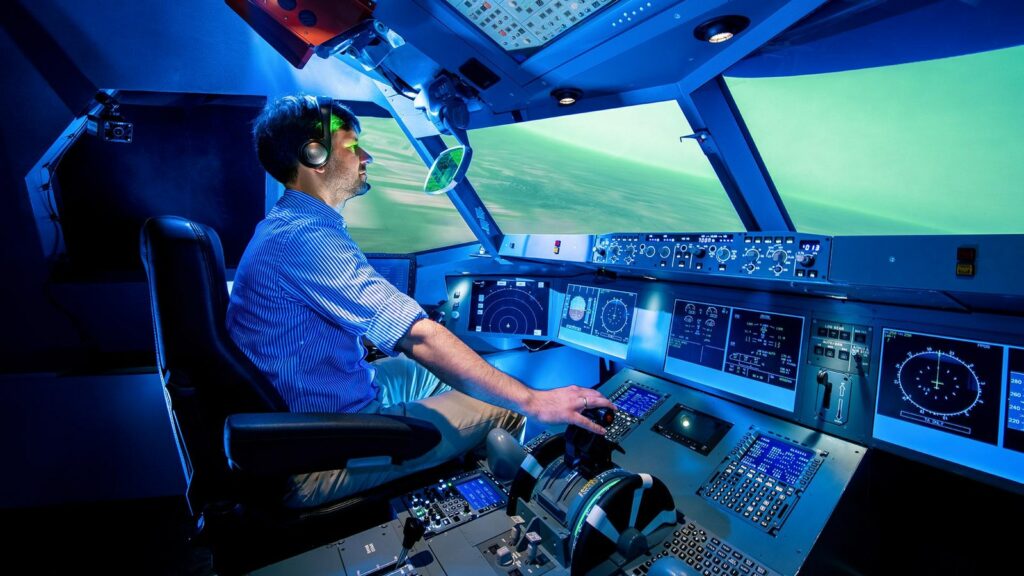
Humans interact with automation every day. As end-users, they are often subject to automation, from the benefits and pitfalls of autocorrect functions on personal phones to the comfort or discomfort of self-driving cars. As operators, especially in safety-critical domains like aviation, they are responsible for interacting with complex technical systems, for supervising automation, or are expected to collaborate with it to make decisions and solve problems. Advances in technology change the humans’ role and also their behavior in relation to automation. Yet, measuring said behavior remains a fundamental methodological challenge. Established measures often provide only snapshots of behavior or rely on conditions that are far removed from the dynamic, time-critical environments in which humans increasingly interact with automated systems. This limits our ability to understand how human states evolve, how they affect performance, and how they can be monitored in real time.
In this symposium, the speakers present novel methods for measuring human behavior, perception and cognition in relation to automation, from operator state monitoring to constructing virtual representations of human behavior. The presentations cover, amongst others, human factors constructs like workload, situation awareness, attention and mind wandering, and explore possibilities for real-time and post-hoc assessments in dynamic simulations, as well as new trends in physiological data processing and the use of digital twins in research.
The speakers will be announced after their papers have been accepted.