 Measuring Behavior
Organisers
- Michael Wiesing (Event Lab, Department of Clinical Psychology and Psychobiology,
University of Barcelona) - Artur Pilacinski (Department of Neurosurgery, University Hospital Bochum)
Summary
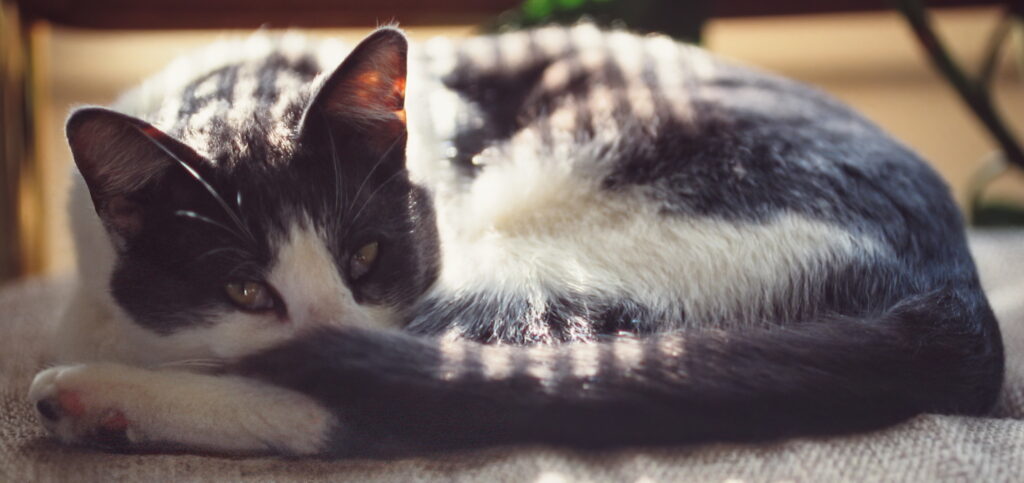
How does the brain determine what belongs to the body, integrate sensory information, and learn to control its movements? This workshop explores how embodying non-human avatars in virtual reality can help investigate the mechanisms underlying human bodily experience. A cat, a tentacled creature, or a mechanical body offers opportunities to manipulate properties that are closely coupled in everyday life, including anatomy, sensory feedback, and action capabilities. By systematically changing these relationships, researchers can test how prior expectations and current sensorimotor evidence contribute to body ownership, agency, and the body representations used for action.
The workshop focuses on the question of how non-human embodiment can become a rigorous experimental tool for studying the human brain? Topics include separating ownership from successful interface control, measuring adaptation to unfamiliar limbs, and testing how altered bodies influence spatial perception and action planning. Particular attention will be given to experimental controls, reproducible movement mappings, and the combination of behavioural tasks, subjective reports, and neural recordings such as EEG or fNIRS. Participants will examine which measures distinguish competing explanations, how to control for novelty, task difficulty, and automated movement, and how findings can be connected to the experience and control of our physical bodies.
Participation will require submission of a short paper describing an empirical study, methodological contribution, or concrete research proposal. Submissions should identify a question about human embodiment and explain how a non-human avatar could help investigate it. We welcome contributions from cognitive neuroscience, psychology, movement science, comparative cognition, robotics, and VR research.
Format